How to Write a Book Series With AI (Without Losing Continuity)
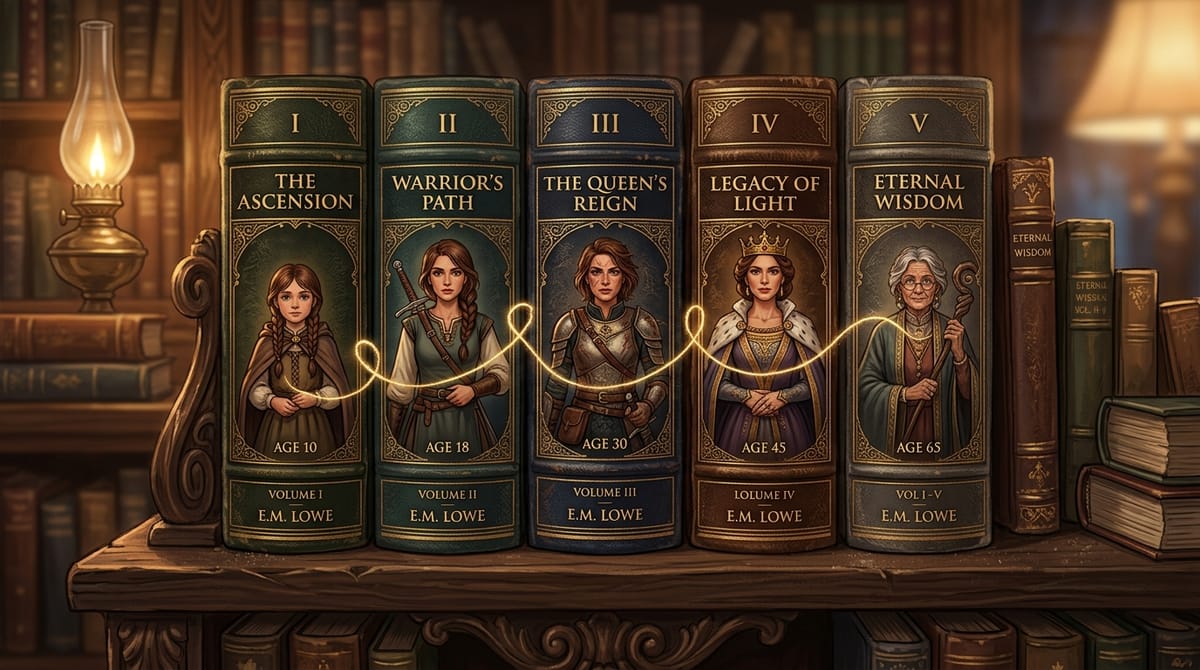
Writing one novel is hard. Writing a series — where every character, plot thread, and world detail must stay consistent across hundreds of thousands of words and multiple books — is exponentially harder.
AI writing tools can help you draft faster, brainstorm better, and push through creative blocks. But when it comes to series writing, most AI tools actually make your biggest problem worse: they forget everything between sessions.
This guide walks through a practical system for writing a book series with AI assistance while maintaining the continuity your readers expect.
The Series Writer's Consistency Problem
Series readers are the most detail-oriented readers on the planet. They notice when:
- A character's eye color changes between books
- A magic system rule is violated without explanation
- A secondary character's name is spelled differently
- The timeline of events doesn't add up
- A character references an event that hasn't happened yet in the story
In a standalone novel, you can catch most of these in revision. In a series, the complexity is multiplicative. Book 3 needs to be consistent not just with itself, but with everything established in Books 1 and 2.
Now add AI to the mix. If your AI doesn't know what happened in previous books — what your characters look like, how they've changed, what rules govern your world — it will generate output that contradicts your established canon. Every AI-generated scene becomes a potential continuity bomb.
The Solution: A Series Bible That Powers Your AI
The key to writing a series with AI is a shared, AI-integrated series bible — a single knowledge base that spans all your books and feeds into every AI operation.
Here's how to build and maintain one:
Foundation Layer: The Permanent Canon
These elements stay consistent across your entire series:
Characters (Core)
- Physical descriptions that don't change (height, bone structure, distinguishing marks)
- Core personality traits and speech patterns
- Backstory established in previous books
- Key relationships and how they formed
World Rules
- Magic/technology systems and their limitations
- Geography and political structures
- Social norms and cultural details
- Historical events that shaped the world
Series-Level Plot
- The overarching conflict or mystery
- Major plot threads that span multiple books
- Foreshadowing planted in earlier books
- The intended series arc
Progression Layer: What Changes Book to Book
This is where series writing gets complex:
Character Progressions
- How has each character changed since the last book?
- New skills, relationships, or knowledge acquired
- Emotional/psychological growth or regression
- Physical changes (injuries, aging, appearance changes)
World State
- What's changed in the world since the last book?
- Political shifts, wars, discoveries
- New locations introduced
- Changes to existing locations
Reader Knowledge
- What does the reader know at the start of this book?
- What secrets have been revealed vs. withheld?
- What does the reader expect (and where will you subvert those expectations)?
The Book Handoff Checklist
Before starting each new book in the series, update your series bible with:
- Character status report — Where is each character physically, emotionally, and relationally at the end of the previous book?
- Unresolved threads — What plotlines are still open? What questions are unanswered?
- Reader promises — What has been foreshadowed or set up that needs to pay off?
- World state changes — What's different about the world now?
- New elements — Any new characters, locations, or rules introduced?
A Practical AI Workflow for Series Writing
Step 1: Set Up Your Shared Series Bible
Before writing Book 2 (or even during Book 1), create a comprehensive series bible. The more complete it is, the better your AI assistance will be across all books.
Tools like ProseWeave support shared Story Bibles across multiple books in a series — meaning the AI in Book 3 knows everything from Books 1 and 2 automatically.
Step 2: Establish "Previously On" Context
At the start of each writing session, make sure your AI knows:
- Which book you're currently writing
- Where you are in the story
- Which characters are in the current scene
- What just happened in the previous scene
With an AI-integrated series bible, this context is automatic. Without one, you're manually copy-pasting backstory into every prompt — a recipe for missed details and wasted time.
Step 3: Draft With Series Awareness
When using AI to draft scenes, the most common series continuity errors are:
Character voice drift — A character sounds different than they did in previous books.
→ Fix: Include speech pattern notes in your series bible. "Marcus speaks in short, declarative sentences. Never uses contractions. Occasionally makes dry historical references."
Knowledge violations — A character knows something they shouldn't yet.
→ Fix: Track character knowledge per book. "At the start of Book 2, Elena does NOT know about the prophecy. She learns about it in Chapter 8."
World rule breaks — Magic/technology works differently than established.
→ Fix: Document all rules with explicit limitations. "Teleportation requires line of sight to the destination. Cannot teleport through walls. Costs significant physical energy — a mage can teleport roughly 3 times before exhaustion."
Timeline inconsistencies — Events happen in the wrong order or take the wrong amount of time.
→ Fix: Maintain a master timeline with dates/days for every significant event across all books.
Step 4: Run Consistency Checks
After drafting each chapter, check it against your series bible for:
- Character detail accuracy (appearances, ages, relationships)
- World rule compliance
- Timeline coherence
- Knowledge-appropriate dialogue and actions
- Tone/style consistency with previous books
AI-powered consistency checkers can automate this — scanning your manuscript against your story bible to flag potential contradictions before they make it to your readers.
Step 5: Update the Bible After Each Book
When you finish a book, spend 1–2 hours updating the series bible:
- Add all new characters, locations, and world details
- Update character progressions
- Document the plot events and timeline
- Note unresolved threads and planted foreshadowing
- Record any rule clarifications or expansions
This investment pays massive dividends when you start the next book.
Common Series + AI Pitfalls
"The AI keeps contradicting Book 1"
Your AI doesn't have access to Book 1's details. Either use a tool with shared series bible functionality, or manually create a "Book 1 Summary" document that you include in your AI context for Book 2.
"My characters all sound the same now"
Character voice drift happens when AI loses context about individual speech patterns. Detailed character voice notes in your story bible are the fix — not just personality traits, but actual speech examples.
"The world feels inconsistent"
Document everything. If you mention in Book 1 that the market closes at sunset, don't have characters shopping at midnight in Book 3 unless you've explained why. An AI with access to your world rules will respect them; an AI without access will cheerfully contradict them.
"I can't remember what I foreshadowed"
Keep a dedicated "Foreshadowing & Payoff" tracker in your series bible:
| Planted In | The Setup | Expected Payoff | Paid Off In |
|---|---|---|---|
| Book 1, Ch. 3 | The locked room in the attic | Reveals the mother's secret identity | Book 2, Ch. 18 |
| Book 1, Ch. 12 | The scar on Marcus's hand | Connected to the ancient binding ritual | Book 3 (planned) |
The Series Writer's AI Toolkit
To write a series effectively with AI, you need:
- A shared story bible that spans all books and feeds into AI automatically
- Character progression tracking so the AI knows how characters have evolved
- Consistency checking to catch contradictions before readers do
- Series management that lets you work across multiple books in one project
ProseWeave was built specifically with series writers in mind. The shared Story Bible, Consistency Checker, and Series Management features work together to solve the exact problems that make series writing with AI so difficult.
Start Your Series Right
The best time to set up your series bible was before Book 1. The second best time is now. Whether you're planning a trilogy or an open-ended series, investing in a solid series infrastructure now will save you hundreds of hours of continuity headaches later.
Your readers remember everything. Make sure your AI does too.
Writing a series? ProseWeave's shared Story Bible keeps your characters, world, and continuity consistent across every book. Start your free 30-day trial.